

Study in Australia: Complete Guide for Indian Students
Australia is home to eight of the world's top 100 universities, a welcoming multicultural society, and one of the most generous post-study work visa policies for international graduates. Here's everything Indian students need to know.
Planning Your 2027 or 2028 Intake? Here's Why Now Matters.
The strongest applications aren't written under deadline pressure — they're built 12 to 18 months in advance. If you're targeting a Fall 2027 intake, the ideal time to start your university shortlisting, test preparation, and SOP drafting is now. If you're aiming for 2028, you have a real advantage: enough time to strengthen your profile, target better scholarships, and apply to reach universities you might otherwise skip.
Early applicants consistently get first pick of scholarships, visa appointment slots, and accommodation — all of which fill up as deadlines approach. Whichever year you're targeting, the students who start early are the ones with the most options, not the most stress.
Book your free profile evaluation and let's build your 2027 or 2028 roadmap together — there's no cost, and no pressure to decide anything today.
Higher Education in Australia: The Quick-Facts Matrix
| Core Criteria | Requirements & Practical Timelines for Indian Applicants |
|---|---|
| Primary Intakes | February/Semester 1 (Main intake) & July/Semester 2 (Secondary major intake cycle) |
| Average Tuition Fees | AUD 28,000 to AUD 48,000 per academic year depending on course specialization |
| Post-Study Work Visa | 2 to 4 Years standard temporary graduate visa (Subclass 485) depending on qualification level |
| IELTS / PTE Status | Mandatory for most visa assessments; can be taken alongside profile evaluation steps |
| Visa Approval Timeline | 4 to 8 weeks; requires absolute alignment with Genuine Student (GS) guidelines |
Did you complete your Class 12th (CBSE / ICSE / State Board) with 70%+ in English? You may qualify for a complete IELTS waiver at select top universities using a Medium of Instruction (MOI) certificate from your school.
Ask our counsellors whether your target Australian universities accept an MOI certificate in lieu of IELTS/PTE — several Go8 institutions and partner universities do.
Study in Australia without the Agent Bias: 100% Commission-Free Guidance
Australia's student visa framework requires strict financial transparency and genuine intent. Traditional agents often push students toward specific regional partner institutes purely to secure heavy commissions. At MyEduQuest, our independent consultants in Dwarka Delhi provide unbiased guidance, ensuring your profile targets top Group of Eight (Go8) universities and premier providers.
⚠️ Traditional Commission-Based Agents
- ✗Push regional colleges with weak placement records to maximize backend agent payouts.
- ✗Ignore complex Genuine Student (GS) statement drafting, leading to immediate visa rejections.
- ✗Hide tuition fee refund policies if your circumstances change.
✅ MyEduQuest Independent Consultants
- ✓Provide complete visibility into top-tier Australian universities and city-center campuses.
- ✓Meticulously structure your Genuine Student (GS) narrative to pass rigorous immigration audits.
- ✓Offer completely transparent, upfront guidance on visa conditions and living expenses.
What is the Genuine Student (GS) requirement for an Australian Student Visa?
The Genuine Student (GS) criteria replaces the old GTE statement for Australia Subclass 500 visas. Applicants must answer targeted questions demonstrating academic background, career relevance, and financial capacity in Australia.
How much proof of funds is required for an Australia student visa in 2026?
International students applying for an Australian Subclass 500 visa must demonstrate liquid financial proof of AUD 29,710 for annual living expenses, plus first-year tuition fees and travel costs.
Beyond academics, Australia offers an exceptional quality of life. Cities like Melbourne, Sydney, Brisbane, and Perth are consistently ranked among the world's most liveable cities. Australia has a large and well-established Indian community — over 700,000 Indian-origin residents — which means cultural familiarity, Indian food, temples, and community networks are available in every major city.
One of Australia's biggest draws for Indian students is its post-study work visa (Subclass 485), which allows graduates to live and work in Australia for 2 to 4 years after completing their degree. This gives students real-world Australian work experience, which is a critical stepping stone toward permanent residency through the SkillSelect points-based system.
Australia's immigration system actively values international graduates. With a transparent points-based PR pathway, strong demand for skilled workers in technology, healthcare, engineering, and education, and a government that has historically welcomed Indian migrants, Australia offers one of the clearest routes from student to permanent resident available anywhere in the world.
Which Are the Top Universities in Australia for Indian Students?
The top Australian universities for Indian students include University of Melbourne, ANU, University of Sydney, UNSW, Monash University, and UQ — all Group of Eight institutions offering globally recognised degrees and strong post-study work visa eligibility.
These six institutions are the most popular and respected choices among Indian applicants.
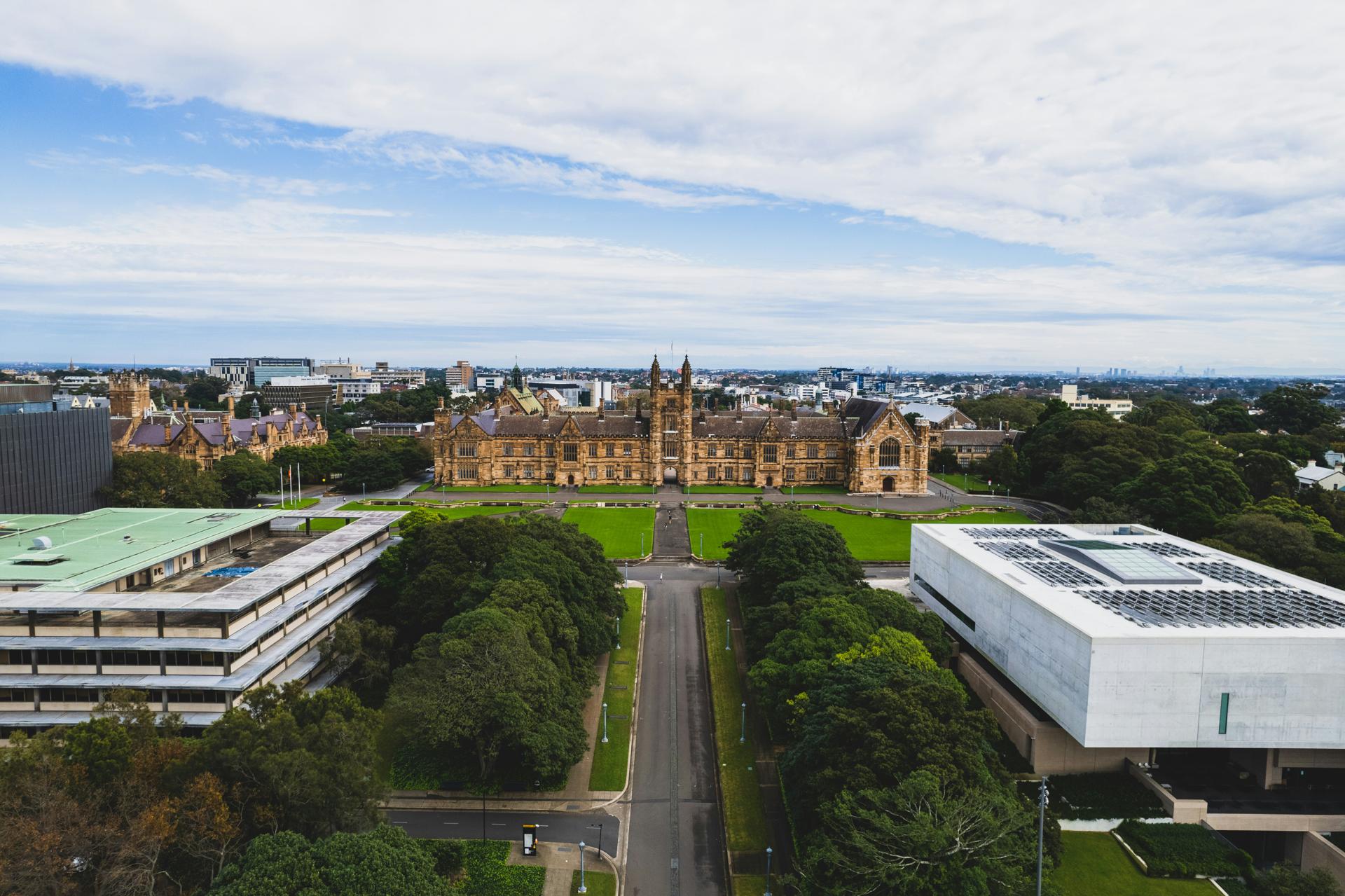
University of Melbourne
Australia's #1 university and a global top-35 institution, renowned for research excellence across engineering, law, and medicine.
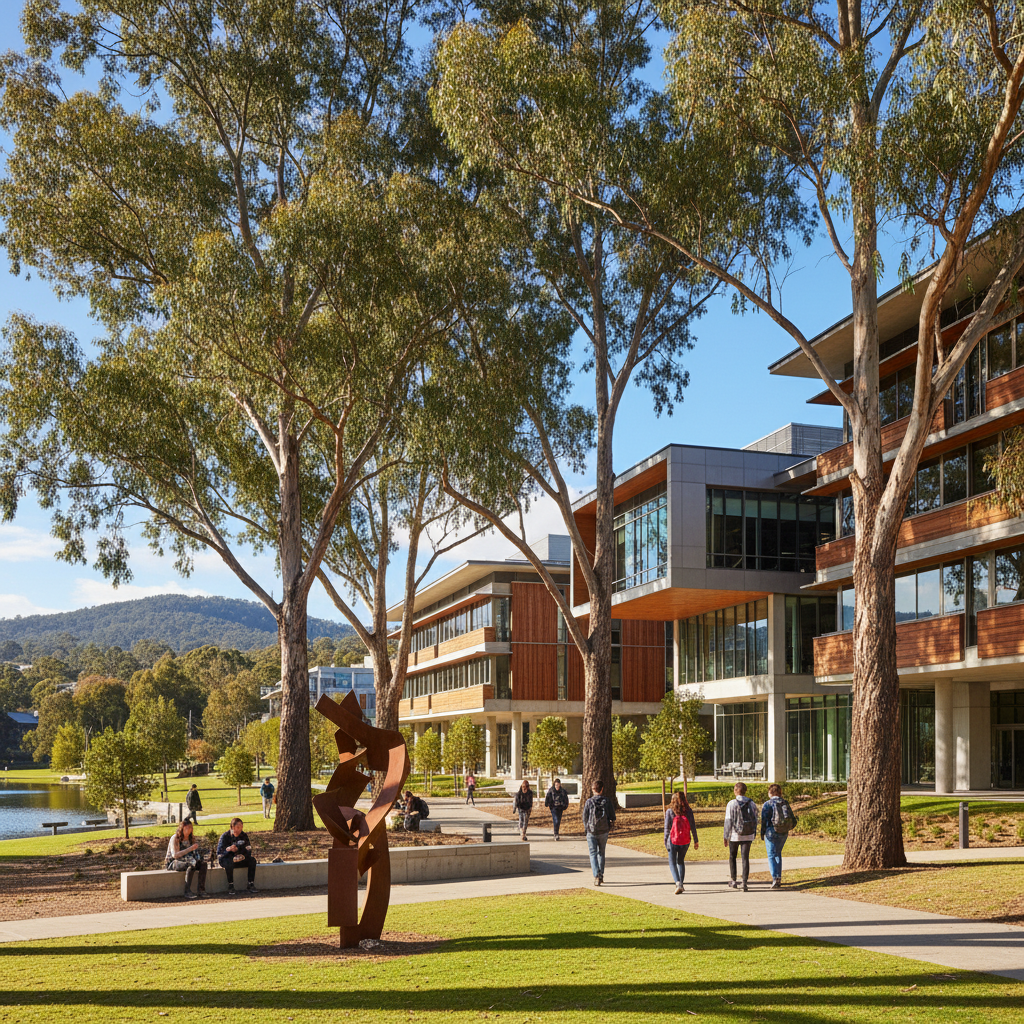
Australian National University (ANU)
Located in Canberra, ANU is Australia's national research university and consistently ranks among the world's top 35 institutions.
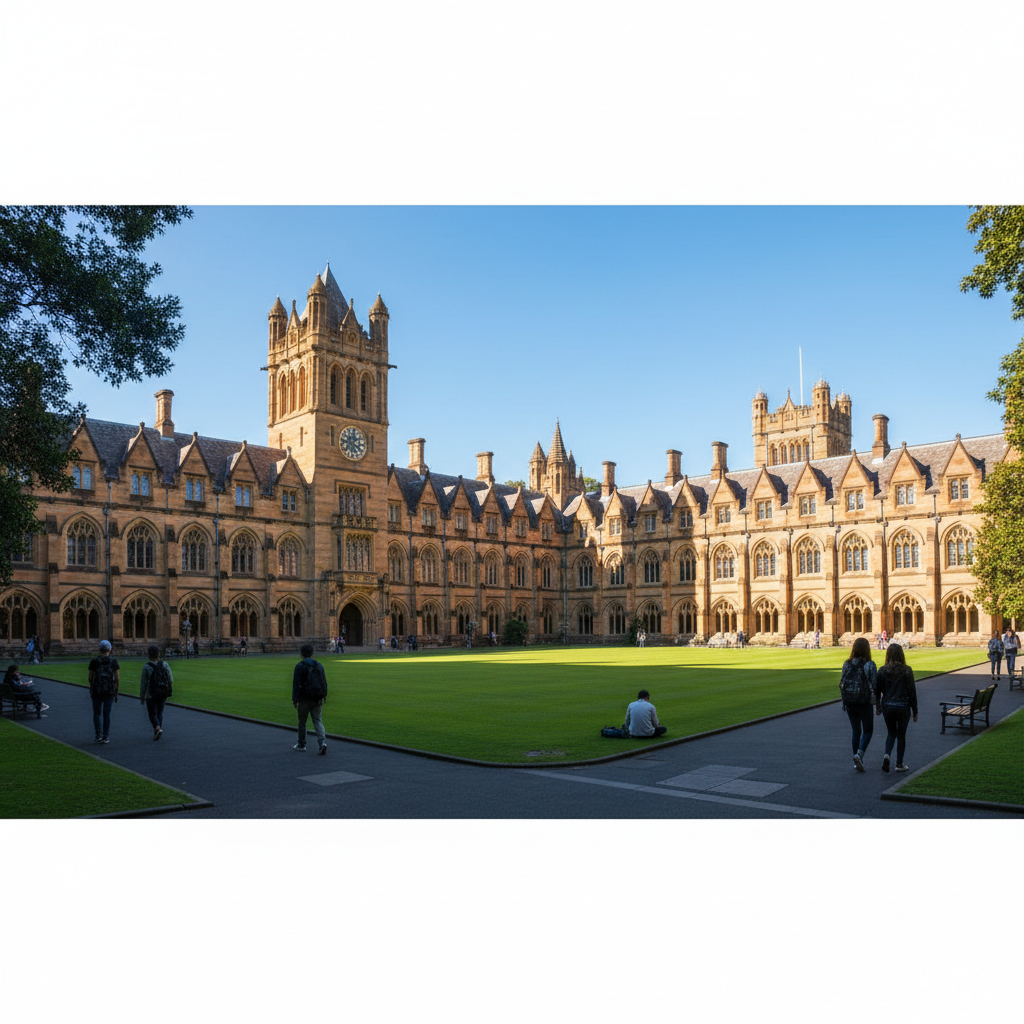
University of Sydney
Australia's oldest university with a stunning sandstone campus, offering world-class programs in business, law, and health sciences.
UNSW Sydney
Top-ranked for engineering, business, and law — UNSW graduates are among the most sought-after by Australian and global employers.
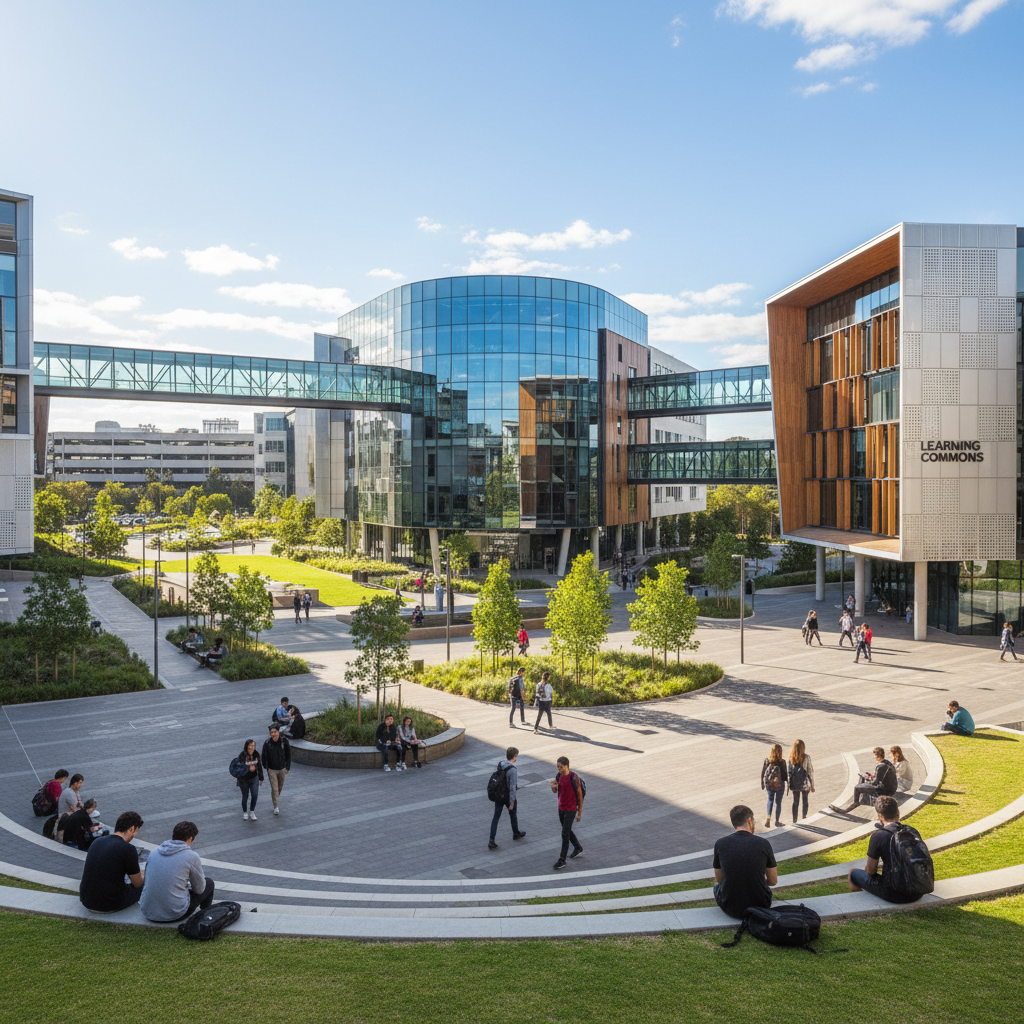
Monash University
Australia's largest university with campuses in Melbourne and Malaysia, known for strong industry partnerships and research output.
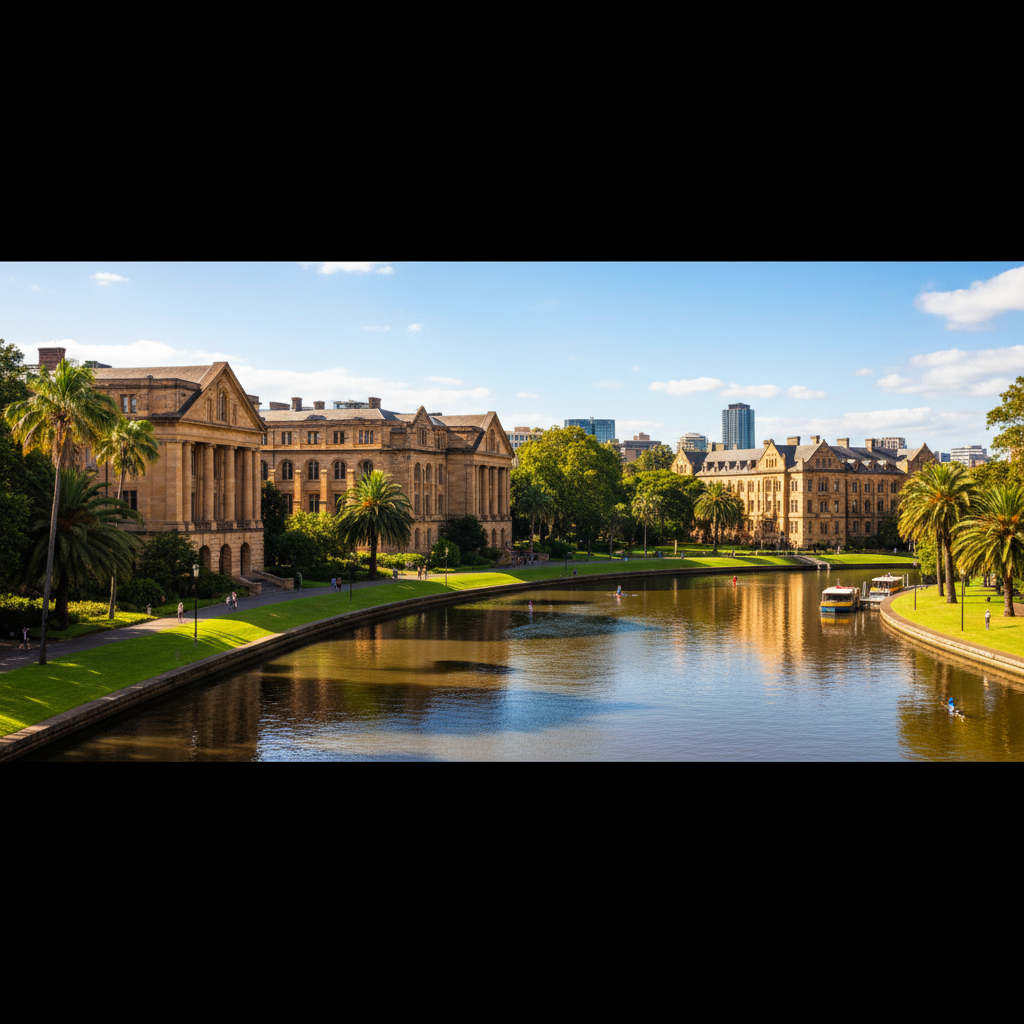
University of Queensland (UQ)
A global leader in biomedical research and sustainability, located in Brisbane with a vibrant campus and strong graduate outcomes.
What Are the Australia Student Visa (Subclass 500) Requirements for Indian Students?
Indian students need the Student Visa (Subclass 500) to study in Australia. You apply online through ImmiAccount after receiving a CRICOS-registered offer letter and arranging mandatory OSHC health insurance. Processing typically takes 4–6 weeks.
- ✓Valid offer letter from an Australian university registered on CRICOS (Commonwealth Register of Institutions and Courses for Overseas Students)
- ✓Genuine Temporary Entrant (GTE) statement — a written explanation of why you want to study in Australia and your intention to return home after studies
- ✓Proof of financial capacity: tuition fees + living costs (approx. AUD 21,041/year) + return airfare
- ✓Overseas Student Health Cover (OSHC) — mandatory health insurance for the full duration of your visa
- ✓English language proficiency: IELTS 6.0+ (or equivalent TOEFL/PTE) for most undergraduate programs; 6.5+ for postgraduate
- ✓Academic transcripts, certificates, and a valid passport with at least 6 months validity beyond your intended stay
- ✓Biometrics and health examination may be required depending on your study duration and country of origin
- ✓Processing time: typically 4–6 weeks for Indian applicants; apply at least 3 months before your course start date
Important: Australia uses a risk-based assessment framework. Indian passport holders are generally in Assessment Level 1 or 2, meaning the application process is relatively straightforward. Always apply through the ImmiAccount portal on the official Department of Home Affairs website.
What Is the Cost of Studying in Australia for Indian Students?
Australian tuition fees range from ₹14–28 lakhs per year, with living costs adding ₹10–15 lakhs annually. Total annual costs of ₹25–43 lakhs are comparable to the UK but lower than the USA, and scholarships like Australia Awards can significantly reduce expenses.
| Expense | Estimated Cost (INR/year) |
|---|---|
| Tuition (Undergraduate) | ₹15–28 lakhs/year |
| Tuition (Postgraduate) | ₹14–25 lakhs/year |
| Living Expenses | ₹10–15 lakhs/year |
| Health Insurance (OSHC) | ₹35,000–60,000/year |
| Total Estimate | ₹25–43 lakhs/year |
* Costs vary by city and institution. Sydney and Melbourne are more expensive; Adelaide, Brisbane, and Perth offer more affordable living costs.
Figures shown are indicative and subject to periodic government revision — our team confirms the latest requirements during your consultation.
What Are the Post-Study Work Rights for Indian Students in Australia (Subclass 485 Visa)?
After graduating in Australia, Indian students can live and work for any employer for 2–4 years on the Subclass 485 visa with no job offer required — the duration depends on your degree level and whether you studied in a regional or metropolitan area.
After graduating in Australia, you can live and work for any employer for 2–4 years with no job offer required — the duration depends on your degree level and where you studied. The Temporary Graduate Visa (Subclass 485) is one of Australia's most valuable offerings for international students. After completing a degree from an Australian institution, eligible graduates can apply for this visa to live, work, and study in Australia — with no restrictions on the type of employer or industry.
The duration of the 485 visa depends on your qualification and where you studied. Graduates of bachelor's, master's, or doctoral degrees from a regional Australian university receive up to 4 years of post-study work rights. Graduates from metropolitan universities typically receive 2–3 years, depending on their degree level and study location.
During this period, you can work full-time for any Australian employer, build your professional network, and accumulate the skilled work experience needed to qualify for permanent residency through the SkillSelect system.
Subclass 485 at a Glance
What Is the PR and Immigration Pathway for Indian Students in Australia?
Australian PR for Indian graduates is achieved through the SkillSelect points-based system. After your degree and 485 visa work experience, you submit an Expression of Interest — most Indian students achieve PR within 4–6 years of arriving in Australia.
Australia's permanent residency pathway for international graduates is built around the SkillSelect points-based system. After completing your degree and gaining work experience on the Subclass 485 visa, you can submit an Expression of Interest (EOI) through SkillSelect for one of three skilled migration visas: the Skilled Independent Visa (189), the Skilled Nominated Visa (190), or the Skilled Work Regional Visa (491).
Points are awarded for factors including age (maximum points for applicants aged 25–32), English language proficiency, years of skilled work experience, educational qualifications, and whether you studied or worked in a regional area. Indian students who score 65 or more points are eligible to submit an EOI, and those with higher scores (typically 80–90+) receive invitations to apply for PR relatively quickly.
The typical pathway for an Indian student looks like this: complete a 2-year master's degree → apply for a 2–3 year Subclass 485 visa → gain 1–2 years of skilled work experience → submit SkillSelect EOI → receive PR invitation. Most students who follow this path achieve permanent residency within 4–6 years of arriving in Australia.
Frequently Asked Admissions Questions
Is Australia a good study destination for Indian students?
Yes. Australia is one of the top study destinations for Indian students, offering world-class universities, a post-study work visa of 2–4 years, a safe multicultural environment, and strong graduate employment outcomes.
What is the cost of studying in Australia for an Indian student?
On average, a bachelor's degree ranges from AUD 25,000 to AUD 35,000 per year, while master's programs range from AUD 30,000 to AUD 45,000 annually. The Australian Department of Home Affairs specifies the official minimum living cost requirement as AUD 29,710 per year to cover accommodation, food, and student utilities.
Can Indian students study in Australia without IELTS or PTE?
While some Australian universities accept a Medium of Instruction (MOI) letter for initial admission offers, the Australian Department of Home Affairs requires a valid English language proficiency test (such as PTE Academic or IELTS) for the student visa application from India. Achieving a strong score is critical to smooth visa clearance.
What are the current post-study work visa timelines in Australia?
Under the Subclass 485 Temporary Graduate visa, international students completing a bachelor's degree are eligible for a 2-year post-study work stay-back, while master's graduates receive 3 years, and doctoral graduates receive 4 years. Choosing to study in designated regional areas can qualify you for an additional 1 to 2 years.
Can Indian students work while studying in Australia?
Yes. International students in Australia can work up to 48 hours per fortnight during the academic term and unlimited hours during scheduled breaks.
What is the Temporary Graduate Visa (subclass 485) in Australia?
The Temporary Graduate Visa (subclass 485) allows international graduates from Australian universities to live and work in Australia for 2–4 years after graduation, depending on the location of study and qualification level.
What are the top universities in Australia for Indian students?
The top universities in Australia for Indian students include the University of Melbourne, Australian National University (ANU), University of Sydney, UNSW Sydney, Monash University, and University of Queensland.
Need help structuring your Genuine Student (GS) statement to avoid an Australian visa rejection?
Take our 60-Second Eligibility Assessment tool. Get your customized destination report sent directly to your WhatsApp.
Take the 60-Second Assessment on WhatsAppReady to Start Your 2027 or 2028 Journey to Australia?
The earlier you start, the more options you have — scholarships, university choices, and visa appointment slots all get tighter closer to intake. Book your free profile evaluation today.
Book Your Free Profile EvaluationNo pressure. No obligation. Just honest advice.