

Study in Singapore: 100% Commission-Free Guidance
Traditional study abroad agencies secretly push you toward partner universities in Singapore that pay them high finder's fees. At MyEduQuest, we don't take a single rupee from colleges. Your future belongs to the best-fit university, not the highest bidder. Get completely honest, unrestricted guidance from independent consultants in Delhi.
Planning Your 2027 or 2028 Intake? Here's Why Now Matters.
The strongest applications aren't written under deadline pressure — they're built 12 to 18 months in advance. If you're targeting a Fall 2027 intake, the ideal time to start your university shortlisting, test preparation, and SOP drafting is now. If you're aiming for 2028, you have a real advantage: enough time to strengthen your profile, target better scholarships, and apply to reach universities you might otherwise skip.
Early applicants consistently get first pick of scholarships, visa appointment slots, and accommodation — all of which fill up as deadlines approach. Whichever year you're targeting, the students who start early are the ones with the most options, not the most stress.
Book your free profile evaluation and let's build your 2027 or 2028 roadmap together — there's no cost, and no pressure to decide anything today.
Singapore Higher Education: The Quick-Facts Matrix
Requirements and practical timelines for Indian applicants.
| Core Criteria | Requirements & Practical Timelines for Indian Applicants |
|---|---|
| Primary Intakes | July/August (Major intake for public universities) & January/February (Private institutional cycles) |
| Average Tuition Fees | SGD 22,000 to SGD 45,000 per academic year depending on course stream and subsidies |
| Post-Study Work Visa | 1 to 3 years via the Long-Term Social Visit Pass (LTVP) framework for qualified graduates |
| IELTS Waiver Status | Eligible if Class 12 English scores exceed 75% (CBSE/ICSE) or via a Medium of Instruction (MOI) certificate |
| Visa Approval Timeline | 4 to 6 weeks from the date of online submission via the SOLAR system |
Why Should Indian Students Study in Singapore?
Singapore is worth considering because it is home to two of the world's top 15 universities — NUS and NTU — offers a familiar cultural environment for Indian students, and is the gateway to careers across the entire Asia-Pacific region's most dynamic economies.
The National University of Singapore (NUS) and Nanyang Technological University (NTU) consistently rank among the world's top 15 universities — ahead of many prestigious UK and US institutions. A degree from NUS or NTU carries enormous weight with employers across Asia, the USA, and Europe, and Singapore's graduates are among the most sought-after in the region.
Singapore is also uniquely comfortable for Indian students. Tamil is one of Singapore's four official languages, and the country has a large and well-established Indian community — approximately 9% of the population. Indian food, temples, cultural events, and community networks are readily available, making the transition to life in Singapore significantly easier than moving to a Western country.
From a career perspective, Singapore is the gateway to Asia. The city-state is home to the Asian headquarters of virtually every major global company — from Google and Facebook to Goldman Sachs and McKinsey. Graduates who build their careers in Singapore gain exposure to the entire Asia-Pacific region, which is increasingly the world's most important economic zone.
What is the MOE Tuition Grant for international students at NUS and NTU?
International students at autonomous Singapore universities (NUS, NTU) can apply for MOE Tuition Grants, reducing tuition fees by up to 50% in exchange for a 3-year work bond. Grant recipients must work for a Singapore-registered company for 3 years after graduation — making it one of the most cost-effective study options in Asia.
What are the post-graduation employment rules for MOE Tuition Grant recipients in Singapore?
International students at autonomous Singapore universities (NUS, NTU) can apply for MOE Tuition Grants, reducing tuition fees by up to 50% in exchange for a 3-year work bond with a Singapore-registered company after graduation. This condition applies to all grant recipients at NUS, NTU, SMU, and SUTD.
Why Ambitious Students Choose MyEduQuest Over Traditional Agents
Traditional Commission-Based Agents
- ✗Limit your options to private institutes that pay them commissions.
- ✗Hide competitive scholarship routes to avoid application delays.
- ✗Use copy-paste SOP templates that lead to strict visa rejections.
MyEduQuest Independent Consultants
- ✓Open access to 100% of available universities, including NUS, NTU, and SMU.
- ✓Shortlist based strictly on your global career metrics, budget, and long-term goals.
- ✓Draft hyper-personalized Statement of Purpose (SOP) strategies from scratch.
Which Are the Top Universities in Singapore for Indian Students?
The top universities in Singapore for Indian students are NUS, NTU, SMU, and SUTD — all publicly funded, internationally ranked, and offering strong career pathways in finance, technology, and engineering across the Asia-Pacific region.
Singapore has four autonomous universities, all publicly funded and internationally recognised.
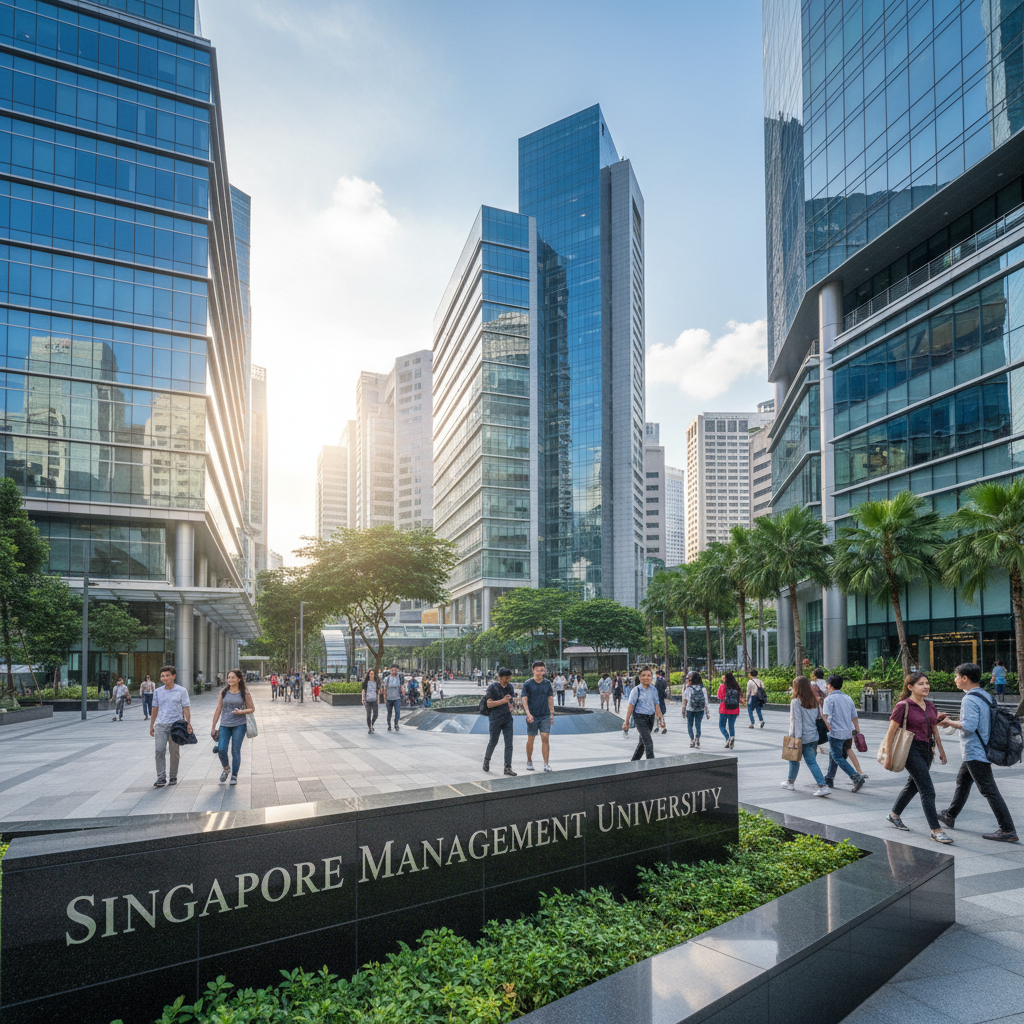
National University of Singapore (NUS)
Asia's #1 university and a global top-10 institution, offering world-class programs in engineering, business, computing, and medicine.
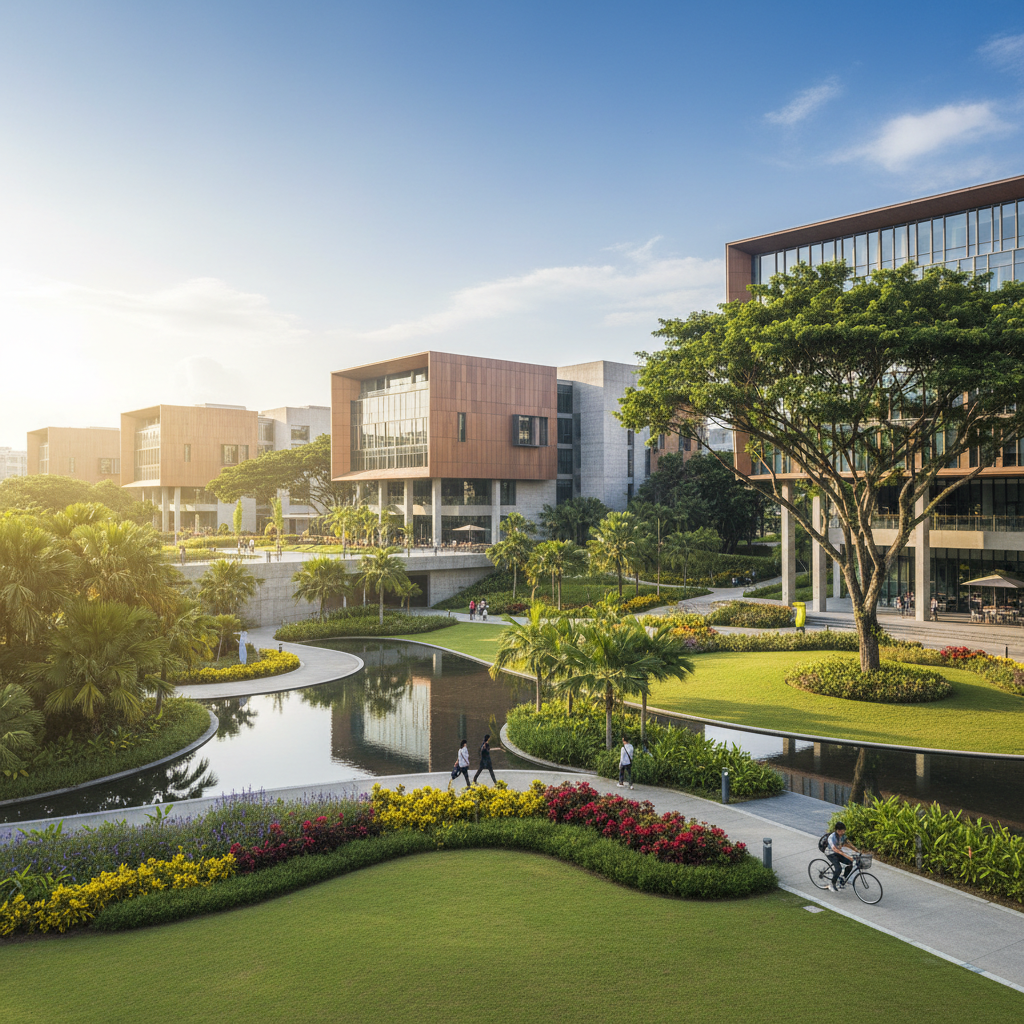
Nanyang Technological University (NTU)
A global top-15 university renowned for engineering, science, and business — NTU graduates are among the most employable in Asia.

Singapore Management University (SMU)
Singapore's premier business and social sciences university, modelled on the Wharton School, with exceptional industry connections in finance and consulting.
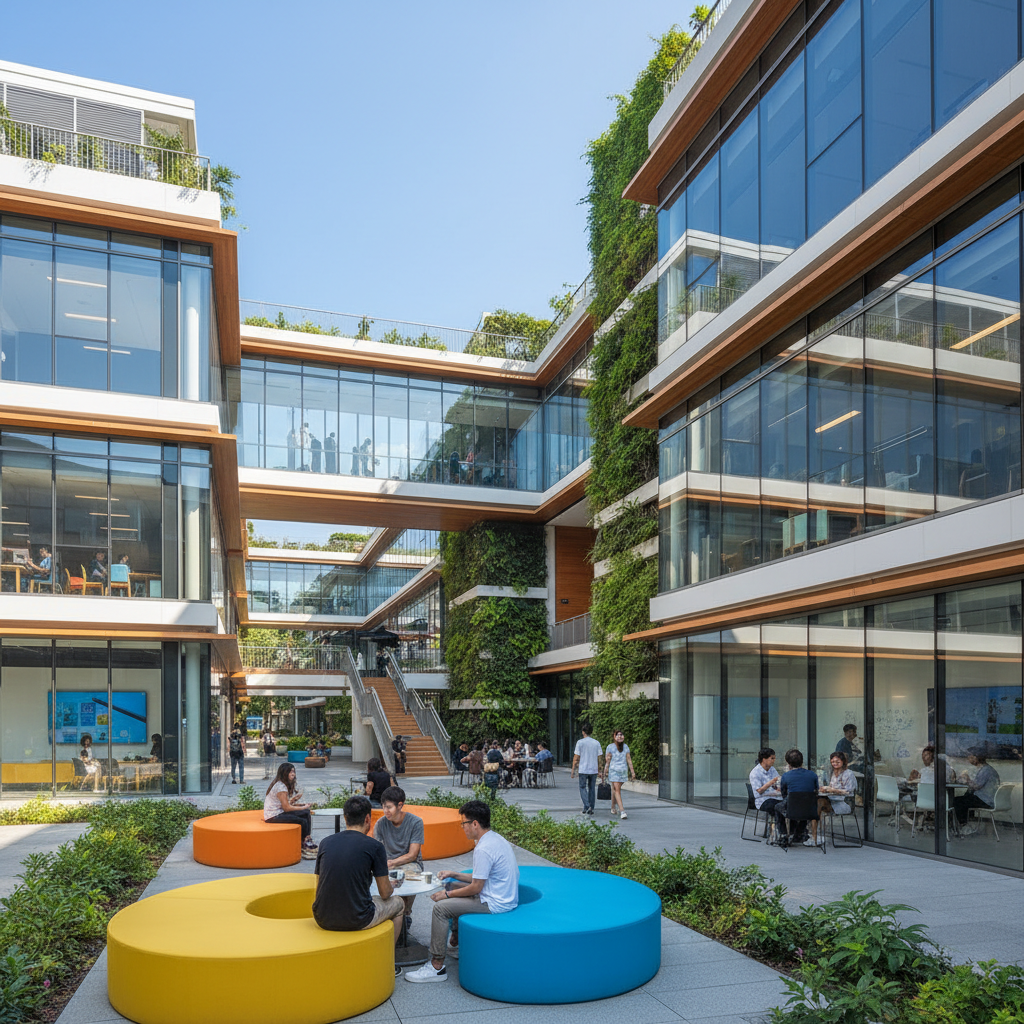
Singapore University of Technology and Design (SUTD)
A unique technology and design university established in collaboration with MIT, focused on innovation, engineering, and architecture.
What Are the Singapore Student's Pass Requirements for Indian Applicants?
Indian students need a Singapore Student's Pass (STP) to study full-time. Your institution applies on your behalf through the SOLAR system after you accept your offer — processing typically takes 4–6 weeks and requires proof of financial ability and English proficiency.
- ✓Student's Pass (STP) — the official visa for international students studying full-time in Singapore, issued by the Immigration and Checkpoints Authority (ICA)
- ✓Acceptance letter from a Singapore institution registered with the Committee for Private Education (CPE) or a public university
- ✓Valid passport with at least 6 months validity beyond your intended stay
- ✓Completed SOLAR (Student's Pass Online Application and Registration) form — submitted by your institution on your behalf
- ✓Proof of financial ability to support yourself during your studies (bank statements or scholarship letter)
- ✓Medical examination report if required by your institution or the ICA
- ✓English language proficiency: IELTS 6.0–6.5 (or equivalent) — NUS and NTU typically require IELTS 6.5+
- ✓Processing time: typically 4–6 weeks; your institution will guide you through the SOLAR application process
What Is the Cost of Studying in Singapore for Indian Students?
Singapore tuition fees range from ₹10–22 lakhs per year, with living costs adding ₹8–13 lakhs annually. Government tuition grants can significantly reduce fees for students who commit to working in Singapore for 3 years after graduation.
| Expense | Estimated Cost (INR/year) |
|---|---|
| Tuition (Undergraduate) | ₹12–22 lakhs/year |
| Tuition (Postgraduate) | ₹10–20 lakhs/year |
| Living Expenses | ₹8–13 lakhs/year |
| Health Insurance | ₹25,000–50,000/year |
| Total Estimate | ₹20–35 lakhs/year |
* Singapore government subsidies (tuition grants) are available for students who commit to working in Singapore for 3 years after graduation, significantly reducing tuition costs.
Figures shown are indicative and subject to periodic government revision — our team confirms the latest requirements during your consultation.
What Are the Post-Study Work Options for Indian Students in Singapore (Employment Pass)?
After graduating in Singapore, Indian students need a job offer to stay — there is no open post-study work visa. You apply for an Employment Pass (EP) once you secure a role paying at least SGD 5,000/month, which is the foundation of Singapore's PR pathway.
After graduating in Singapore, you need a job offer to stay — there is no open post-study work visa. Instead, you apply for an Employment Pass (EP) once you secure a role paying at least SGD 5,000/month. Singapore does not have a dedicated post-study work visa like Australia's 485 or the UK's Graduate Route. Instead, international graduates who secure a job offer from a Singapore employer can apply for an Employment Pass (EP) — Singapore's work visa for professionals, managers, and executives.
The Employment Pass requires a minimum monthly salary of SGD 5,000 (approximately ₹3.1 lakhs/month) for most sectors, and SGD 5,500 for the financial services sector. Graduates of NUS, NTU, and SMU are generally well-positioned to meet this threshold, particularly in technology, finance, and engineering roles.
The Employment Pass is initially granted for 1–2 years and can be renewed as long as you remain employed. It also allows your spouse and children to join you in Singapore on a Dependant's Pass. The EP is the foundation of Singapore's PR pathway — most successful PR applicants have held an EP for at least 2–3 years before applying.
Employment Pass at a Glance
What Is the PR and Immigration Pathway for Indian Students in Singapore?
Singapore PR is granted on a discretionary basis — there is no points system or guaranteed pathway. Most successful Indian applicants have held an Employment Pass for 2–3 years and demonstrate stable employment in a high-demand sector like technology, finance, or engineering. Singapore's permanent residency (PR) is managed by the Ministry of Manpower (MOM) and is granted on a discretionary basis — there is no points-based system or guaranteed pathway. PR applications are assessed holistically, taking into account factors including your employment history, salary, educational qualifications, length of stay in Singapore, and your contribution to Singapore's economy and society.
Most successful PR applicants have held an Employment Pass for at least 2–3 years and have demonstrated stable employment, good salary progression, and integration into Singapore society. Graduates of NUS, NTU, or SMU who work in high-demand sectors (technology, finance, healthcare, engineering) are generally well-regarded in PR applications.
Singapore PR is highly valued — it provides the right to live and work in Singapore indefinitely, access to subsidised healthcare and education, and the ability to purchase HDB (public housing) flats. After holding PR for 2 years, you can apply for Singapore citizenship. The typical timeline for an Indian student: complete a degree → secure Employment Pass → 2–3 years of employment → PR application → citizenship after 2 more years.
Ready to Start Your 2027 or 2028 Journey to Singapore?
The earlier you start, the more options you have — scholarships, university choices, and visa appointment slots all get tighter closer to intake. Book your free profile evaluation today.
Book Your Free Profile EvaluationNo pressure. No obligation. Just honest advice.
Unsure if your academic profile qualifies for a Singapore tuition subsidy or an IELTS exemption?
Take our 60-Second Eligibility Assessment tool. Get your customized destination report sent directly to your WhatsApp.
Start 60-Second Assessment on WhatsAppFree. Instant. No agent bias.