
Study in Ireland: 2-Year Graduate Visa Guide
Ireland is an English-speaking EU member state with world-class universities, a thriving tech industry, and a 2-year post-study work visa. Here's everything Indian students need to know.
Study in Ireland without the Agent Bias: 100% Commission-Free Guidance
Stop falling for traditional study abroad agents who manipulate your university shortlist to secure backend commissions from partner colleges. At MyEduQuest, we operate as independent advisors. We work exclusively for you, ensuring you gain admission to elite Irish institutions based on merit, value, and true post-study career opportunities.
Higher Education in Ireland: The Quick-Facts Matrix
| Core Criteria | Requirements & Practical Timelines for Indian Applicants |
|---|---|
| Primary Intakes | September (Primary major intake for all universities) & January (Limited postgraduate streams) |
| Average Tuition Fees | €10,000 to €25,000 per academic year depending on laboratory vs. classroom configuration |
| Post-Study Work Visa | 2 Years automatic stay-back visa (Third Level Graduate Scheme) for all Master's graduates |
| IELTS Waiver Status | Available for select universities if your bachelor's degree was taught 100% in English |
| Visa Approval Timeline | 4 to 8 weeks via VFS New Delhi; requires a completely itemized financial trace |
Real Value vs. Agent Control
Traditional Commission-Based Agents
- ✗Steer you toward expensive private colleges with low global recognition.
- ✗Avoid complex university processes like Trinity College Dublin or UCD due to rigorous entry barriers.
- ✗Jeopardize your application by filing generic financial drafts.
MyEduQuest Independent Consultants
- ✓Unrestricted access to all top-tier Irish technological universities and traditional institutions.
- ✓Transparent, step-by-step navigation of the Irish visual/paper visa financial tracking requirements.
- ✓Direct profile alignment with Ireland's Critical Skills Employment framework.
How long can Indian graduates stay and work in Ireland after a Master's degree?
Under the Irish Third Level Graduate Scheme (Stamp 1G), international students completing a Master's degree (Level 9) receive a 2-year full-time post-study work visa without needing an immediate employer sponsor.
How much bank balance is required for an Ireland student visa in 2026?
Indian students must show proof of at least €10,000 in readily accessible liquid funds for living expenses during their first year, in addition to full first-year tuition fee payment.
Which Are the Top Universities in Ireland for Indian Students?
The top Irish universities for Indian students include Trinity College Dublin, University College Dublin, University of Galway, Dublin City University, and University College Cork — all offering globally recognised degrees and Third Level Graduate Scheme eligibility.
These five institutions are the most popular choices among Indian applicants to Ireland.
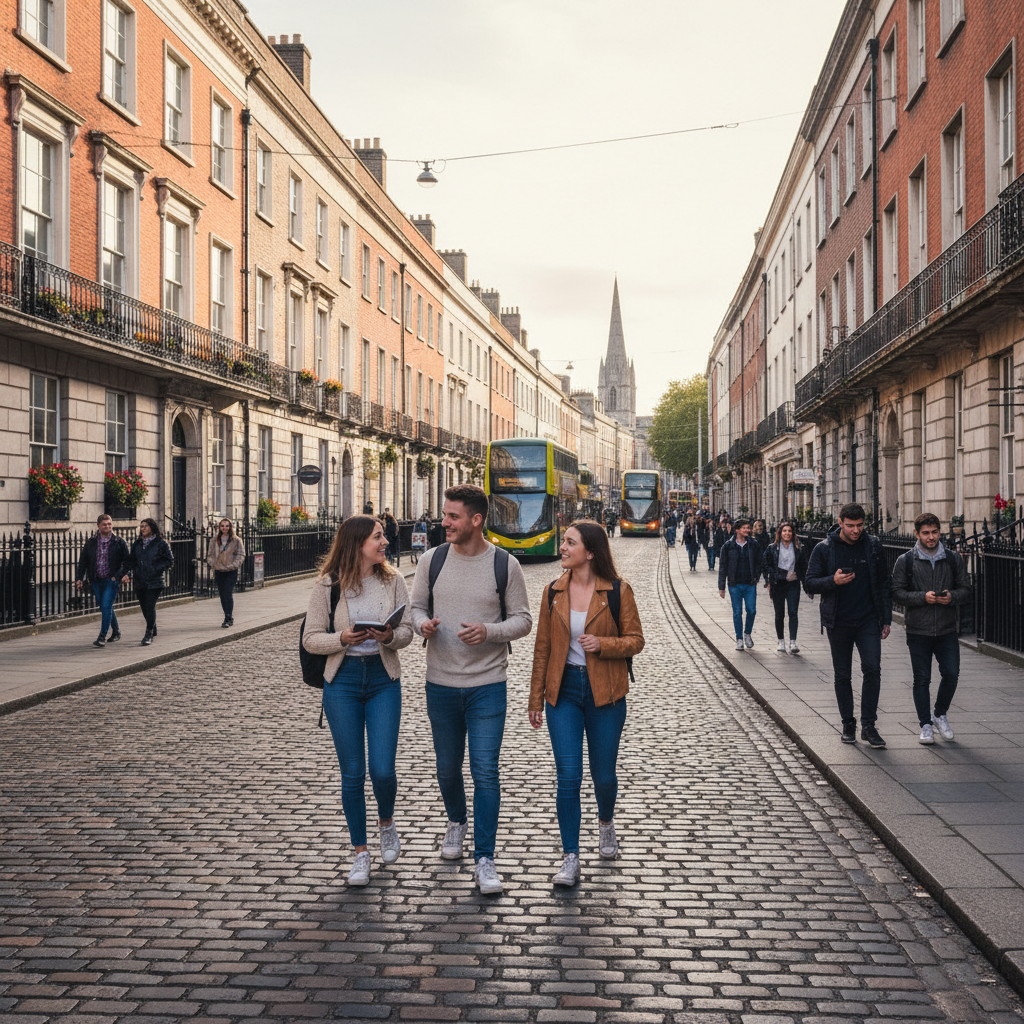
Trinity College Dublin (TCD)
Ireland's most prestigious university, founded in 1592, ranked in the global top 100, with exceptional programs in business, law, computer science, and medicine.
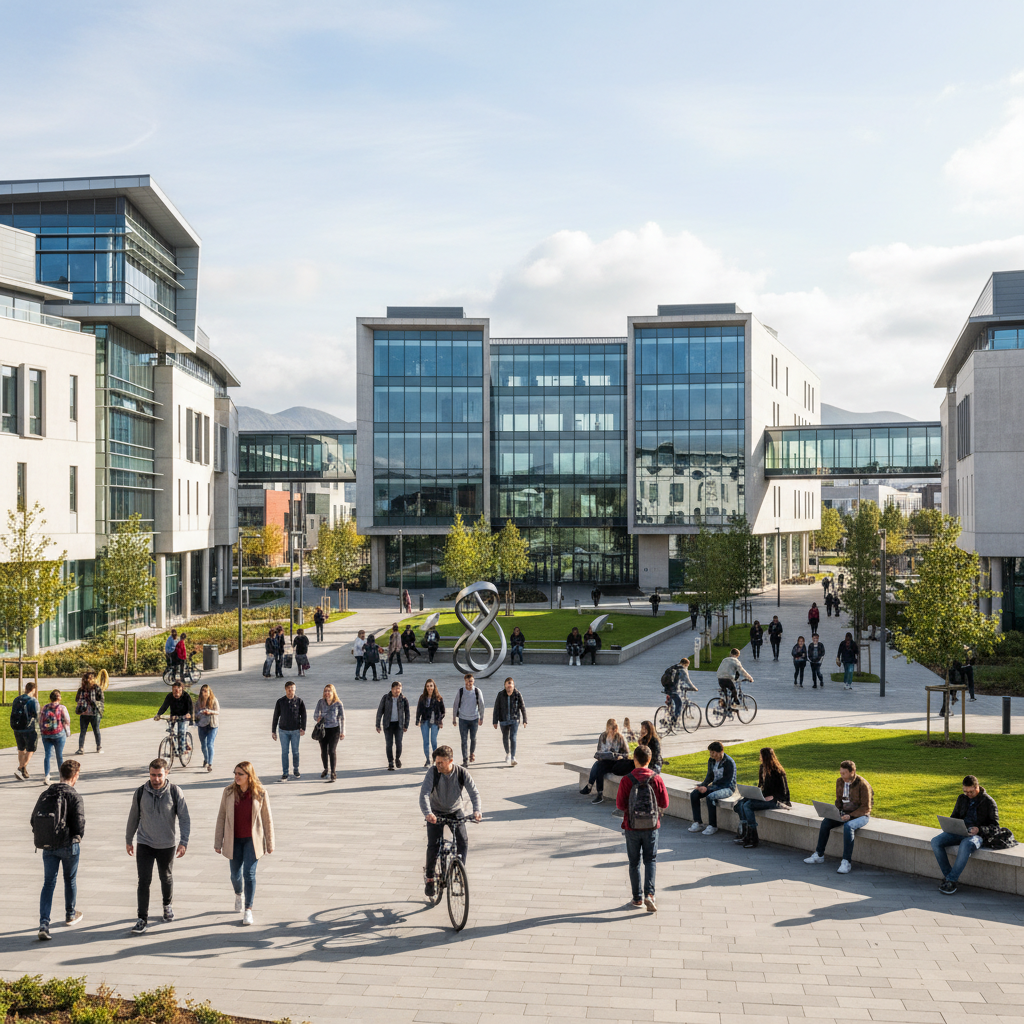
University College Dublin (UCD)
Ireland's largest university and a member of the Russell Group equivalent, known for strong programs in engineering, business (Smurfit), and agriculture.
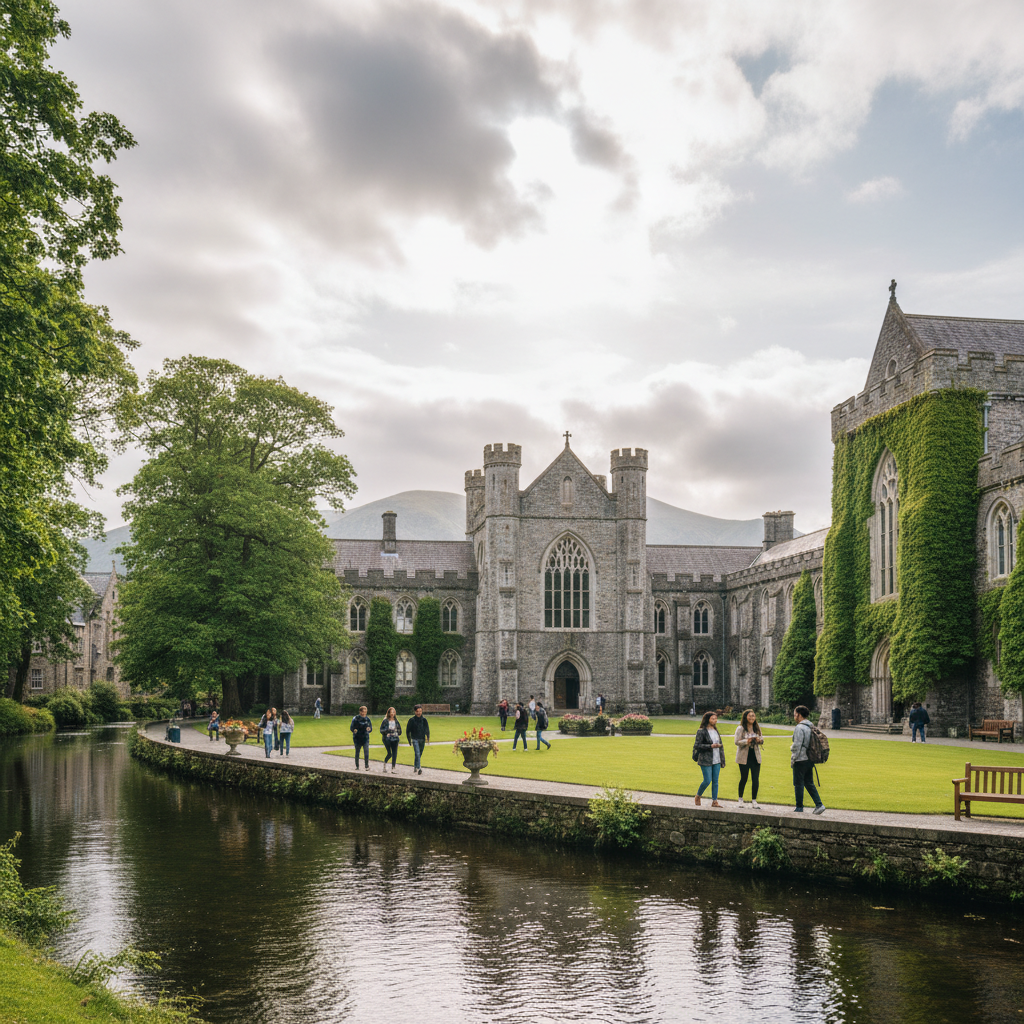
NUI Galway (University of Galway)
A research-intensive university on Ireland's west coast, particularly strong in marine science, biomedical engineering, and arts.
Dublin City University (DCU)
A modern, innovative university in Dublin known for its strong industry connections, particularly in technology, communications, and business.
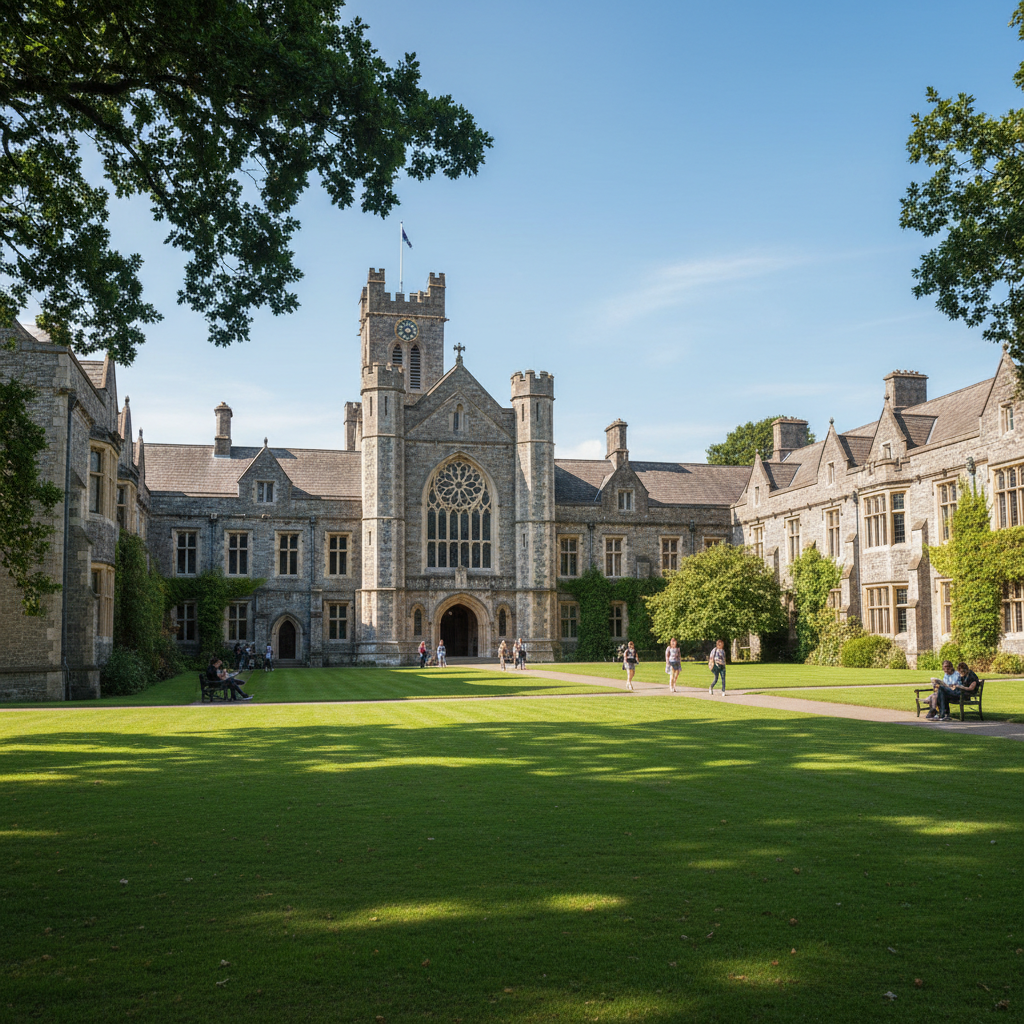
University College Cork (UCC)
A leading research university in Ireland's second city, with strong programs in medicine, pharmacy, food science, and engineering.
What Are the Ireland Student Visa Requirements for Indian Applicants?
Indian students need a D Study Visa to study in Ireland for programs longer than 3 months. You apply through INIS after receiving an acceptance letter from an ILEP-listed institution, with proof of funds of at least €7,000 per year for living expenses.
- ✓Letter of acceptance from an Irish higher education institution that is on the Interim List of Eligible Programmes (ILEP)
- ✓Proof of financial resources: sufficient funds to cover tuition fees + living costs (minimum €7,000 per year for living expenses)
- ✓Valid passport with at least 12 months validity beyond your intended stay in Ireland
- ✓English language proficiency: IELTS 6.0+ (or equivalent) — most Irish universities require IELTS 6.5 for postgraduate programs
- ✓Private medical insurance for the duration of your stay in Ireland
- ✓Completed visa application form (D study visa) submitted to the Irish Naturalisation and Immigration Service (INIS)
- ✓Two recent passport-size photographs and payment of the visa application fee (€60 for single entry)
- ✓Processing time: typically 4–8 weeks; apply at least 2 months before your course start date
What Is the Cost of Studying in Ireland for Indian Students?
Irish tuition fees range from ₹10–22 lakhs per year, with Dublin living costs adding ₹10–14 lakhs annually. Studying in cities like Cork or Galway reduces total annual costs to ₹20–30 lakhs — more affordable than the UK for comparable programs.
| Expense | Estimated Cost (INR/year) |
|---|---|
| Tuition (Undergraduate) | ₹12–22 lakhs/year |
| Tuition (Postgraduate) | ₹10–20 lakhs/year |
| Living Expenses (Dublin) | ₹10–14 lakhs/year |
| Living Expenses (Other Cities) | ₹7–10 lakhs/year |
| Total Estimate | ₹20–36 lakhs/year |
* Dublin is significantly more expensive than other Irish cities. Galway, Cork, and Limerick offer comparable academic quality at lower living costs.
Figures shown are indicative and subject to periodic government revision — our team confirms the latest requirements during your consultation.
What Are the Post-Study Work Rights for Indian Students in Ireland (Third Level Graduate Scheme)?
After graduating in Ireland, Indian students automatically receive 1 year (bachelor's) or 2 years (master's/PhD) of post-study work permission with no job offer required — in any role, for any employer, as a stepping stone to the Critical Skills Employment Permit.
After graduating in Ireland, you automatically receive 1 year (bachelor's) or 2 years (master's/PhD) of post-study work permission with no job offer required. Ireland's Third Level Graduate Scheme allows international graduates of Irish higher education institutions to remain in Ireland and seek employment after completing their studies. The duration of the permission depends on your qualification level:
- →Bachelor's degree graduates: 12 months post-study work permission
- →Master's degree graduates: 24 months post-study work permission
- →PhD graduates: 24 months post-study work permission
During this period, you can work in any role for any employer. The goal is to find employment that qualifies you for a Critical Skills Employment Permit or a General Employment Permit, which then leads to long-term residency in Ireland.
Graduate Scheme at a Glance
What Is the PR and Immigration Pathway for Indian Students in Ireland?
Long-term residency in Ireland is achievable in 6–8 years by following the path: master's degree → Third Level Graduate Scheme → Critical Skills Employment Permit → Stamp 4 → Long-Term Residency — with EU access as an added benefit. The primary route to long-term residency in Ireland for international graduates is through the Critical Skills Employment Permit (CSEP). This permit is available to graduates who secure a job in a high-demand occupation (including most technology, engineering, science, and healthcare roles) with a salary of at least €38,000 per year. The CSEP is initially granted for 2 years and can be renewed.
After holding a Critical Skills Employment Permit for 21 months, you can apply for Stamp 4 permission — which allows you to live and work in Ireland without any employment permit restrictions. After 5 years of legal residence in Ireland (including time on a student visa), you become eligible to apply for Long-Term Residency, which is effectively Ireland's permanent residency status.
The typical pathway for an Indian student: complete a 1-year master's degree → 2-year Third Level Graduate Scheme → Critical Skills Employment Permit → Stamp 4 → Long-Term Residency. Most students who follow this path can achieve long-term residency within 6–8 years of arriving in Ireland. As an EU member state, Irish residency also opens doors to work across Europe.
Frequently Asked Admissions Questions
How much does it cost to study in Ireland for an Indian student?
Tuition fees for international students range from €10,000 to €15,000 for undergraduate courses and €12,000 to €24,000 for postgraduate degrees. The Irish Naturalisation and Immigration Service (INIS) requires international students to show access to a minimum of €10,000 per year for living costs, though practical living expenses average €1,000 per month depending on housing configurations in Dublin, Cork, or Galway.
Can Indian students study in Ireland without IELTS or TOEFL?
Yes, several top-tier universities and colleges in Ireland grant IELTS waivers if you provide an official Medium of Instruction (MOI) letter certifying your entire degree program was completed in English. Additionally, your Class 12 English scores must be 70% or higher depending on the specific institution's entry standards.
What are the post-study work visa options for international graduates in Ireland?
Under the Third Level Graduate Scheme (Stamp 1G), undergraduate level 8 graduates receive a 1-year stay-back visa, while postgraduate level 9 graduates receive a guaranteed 2-year stay-back visa. This allows you to work full-time and transition directly into a Critical Skills Employment Permit.
Is Ireland a good study destination for Indian students?
Yes. Ireland is an English-speaking EU member state with world-class universities, a thriving tech industry (home to Google, Meta, Apple, and Microsoft European HQs), and a 2-year post-study work visa called the Third Level Graduate Scheme.
What is the Third Level Graduate Scheme in Ireland?
The Third Level Graduate Scheme allows international graduates from Irish universities to stay and work in Ireland for 1 year (bachelor's graduates) or 2 years (master's and PhD graduates) after completing their studies. This work permission is granted automatically upon graduation and requires no job offer — giving graduates time to find employment and potentially qualify for the Critical Skills Employment Permit. Ireland is also known for its warm, welcoming culture and the famous Irish hospitality. The country has a growing Indian community, particularly in Dublin, and Indian students consistently report feeling safe, welcome, and well-supported during their studies. The relatively compact size of Irish cities also makes them easier to navigate and more affordable than London or Sydney.
Want to cross-reference your course against Ireland's 2026 Critical Skills Shortage List?
Take our 60-Second Eligibility Assessment tool. Get your customized destination report sent directly to your WhatsApp.
Take the 60-Second Eligibility AssessmentFree. Instant. Sent to your WhatsApp.
Ready to Start Your 2027 or 2028 Journey to Ireland?
The earlier you start, the more options you have — scholarships, university choices, and visa appointment slots all get tighter closer to intake. Book your free profile evaluation today.
Book Your Free Profile EvaluationNo pressure. No obligation. Just honest advice.